


Following a palpably quieter Pitti Uomo and Milan Fashion Week Men’s, Paris is dialling up the energy with a busy few days to close out the A/W 2026 men’s season. Starting strong on Tuesday evening, proceedings got underway with a resolutely beautiful show from Auralee and a house party of sorts at Louis Vuitton, where Pharrell erected a contemporary home with glass walls, furniture and a lawn (made in collaboration with Shinji Hamauzu’s Tokyo-based architecture firm Not a Hotel) inside the brand’s foundation. Another blockbuster display followed at the Musée Rodin on Wednesday, where Jonathan Anderson presented his sophomore men’s collection for Dior. The Irish designer looked to couturier Paul Poiret for a collection which reworked codes of ‘history and affluence’, cementing his eclectic, reference-rich vision for the house.
As for the rest of the week, there’s a mixture of new beginnings and momentous goodbyes. Joining the calendar for the first time is Bologna-based Magliano, who will present his Paris debut among mainstays Rick Owens, Comme des Garçons, Dries Van Noten, Issey Miyake and Sacai. Closing out the week will be an undoubtedly emotional swansong from Véronique Nichanian on Saturday, who hands her 37-year position at the helm of Hermès men’s to Grace Wales Bonner. The London-based designer will present her debut for the heritage Parisian house in January next year.
IM Men

(Image credit: Courtesy of Issey Miyake)
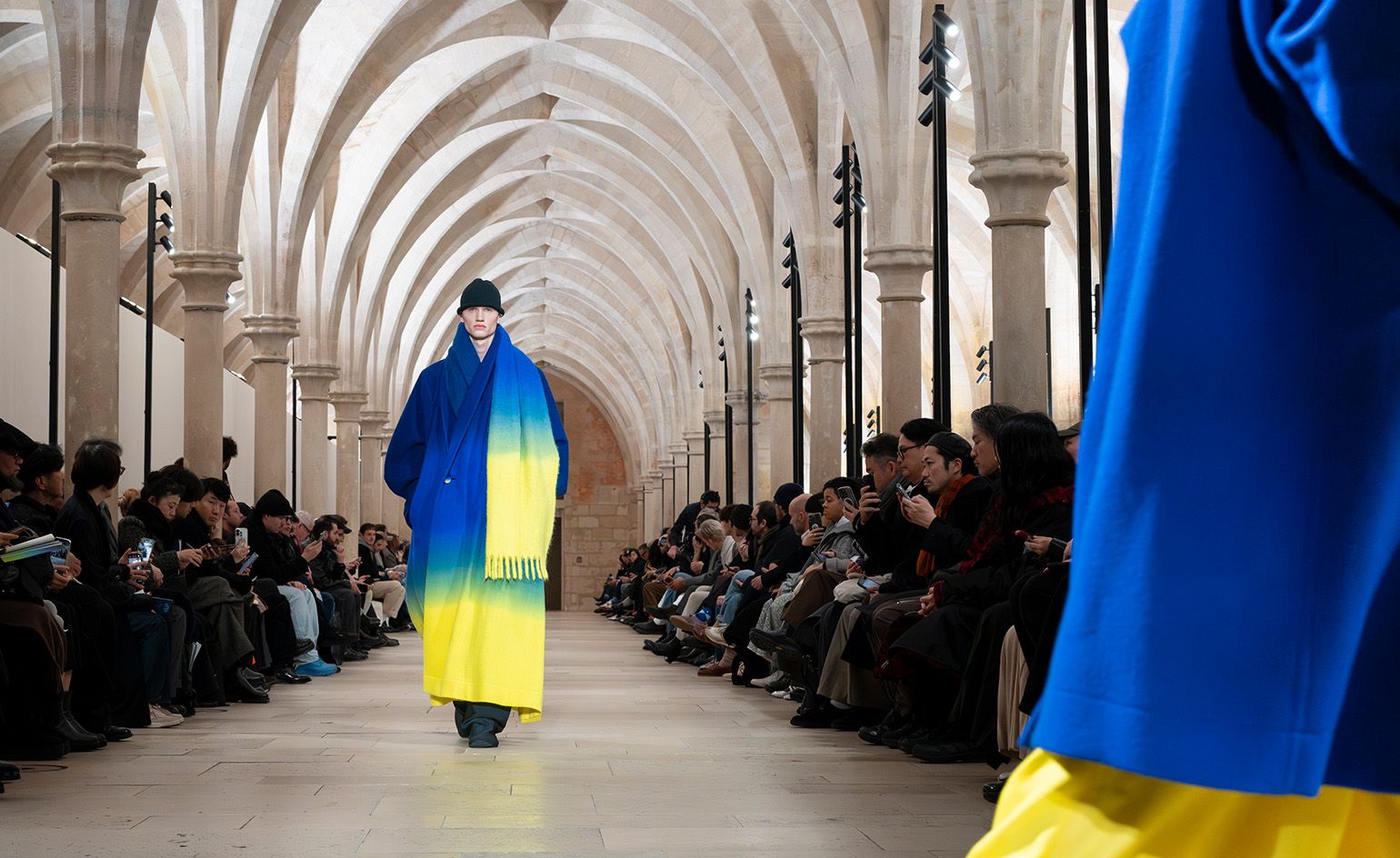
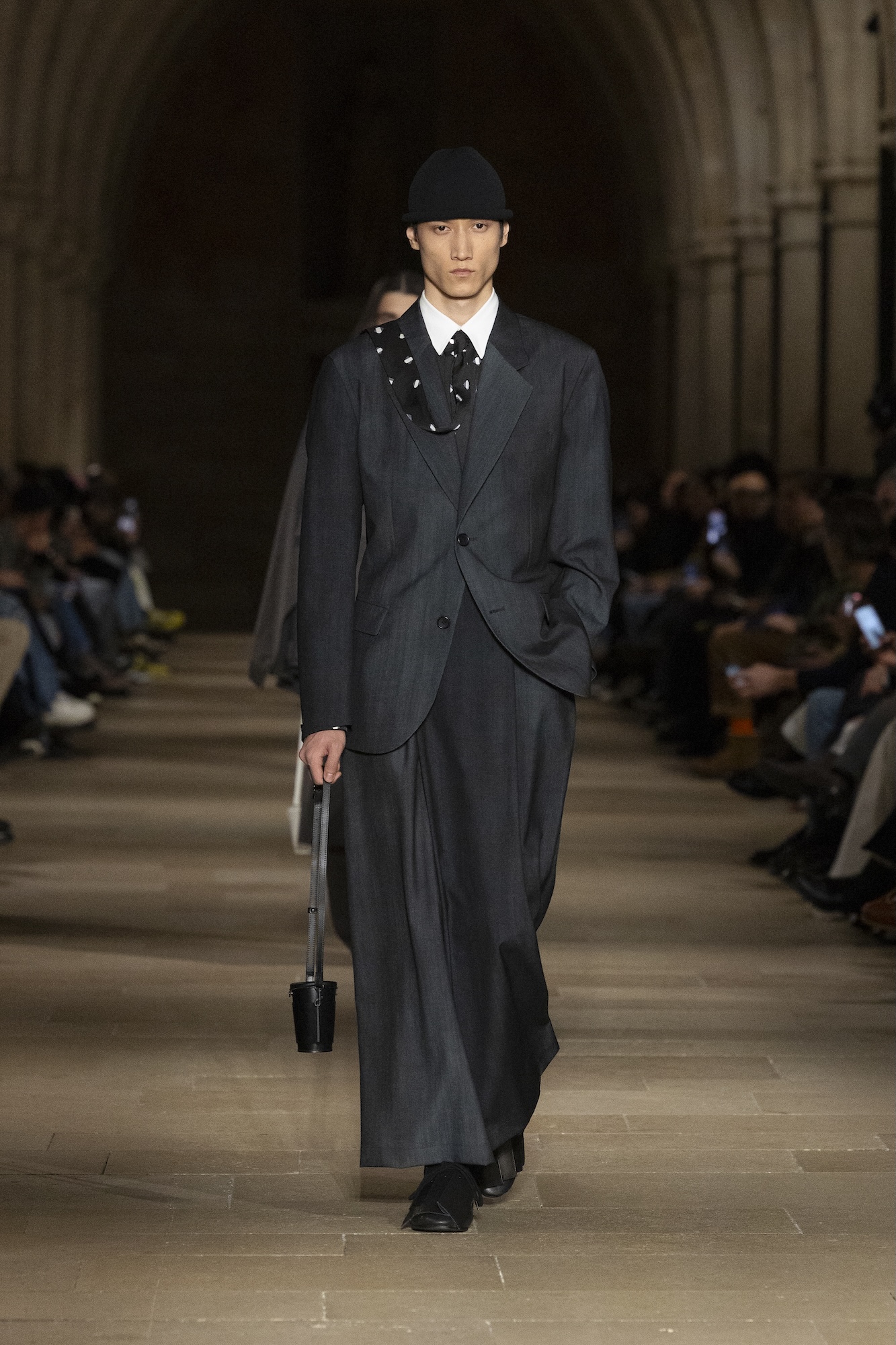
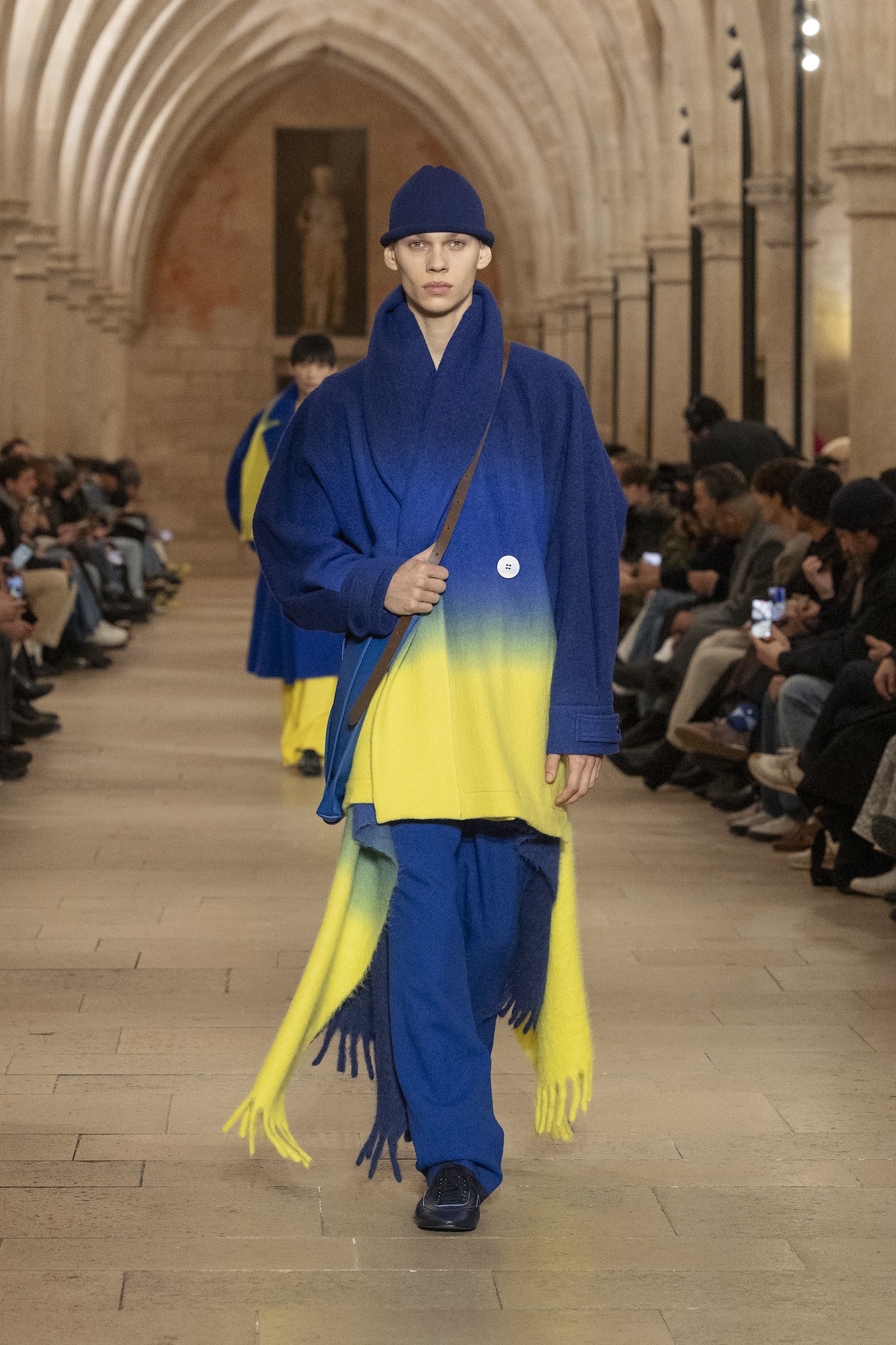
The vaulted nave of Collège des Bernardins, a 13th-century Cistercian school, provided an atmospheric backdrop for IM Men’s third show in Paris, which was titled ‘Formless Forms’ (the Issey Miyake brand replaced Issey Miyake Homme Plissé on the schedule). Designers Sen Kawahara, Yuki Itakura and Nobutaka Kobayashi said that this season they were imagining those moments at the ‘seam of a day’, dawn and dusk, moving from the opening looks in black and white towards a kaleidoscopic finale (a section in optic white was interspersed between). ‘Moments when something begins, and when something ends,’ they elaborated.
But, as the collection’s title suggested, this was at heart a show about form: the endless possibilities of a singular piece of cloth has long been at the heart of the Issey Miyake project. The collection’s expressive silhouettes – largely cut generously, and wrapping around the body, like the scarf-inspired looks towards the end of the show – were developed through endless fabric experimentation. Like the pieces they called ‘Clay’ (presumably for the material’s malleable quality), a heat-treated ribbed knit, which allowed the team to create sculptural silhouettes around the body that would not have been able to be achieved in flat pattern-making.
Other pieces were cleverly padded – life-raft-style or crafted from Kasuri-woven fabric, where yarns are pre-dyed to make intriguing patterns once on the loom. If the processes behind each garment were complicated, the result was anything but: these were clothes which appeared to have been made with the simplest of gestures – ‘formless forms’, appearing like magic from the darkness. Jack Moss
(Image credit: Courtesy of Issey Miyake)
Rick Owens
(Image credit: Courtesy of Owenscorp)
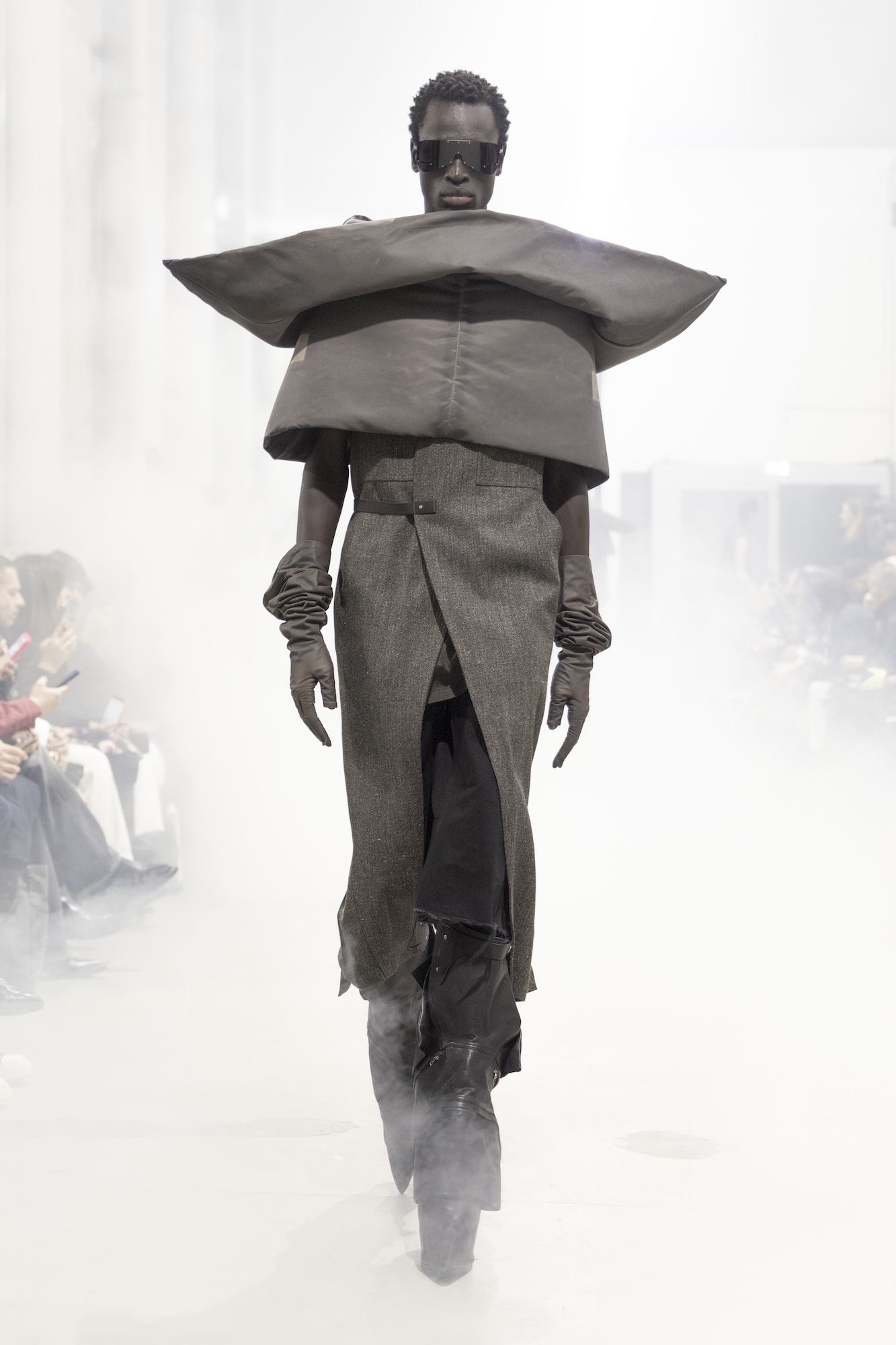
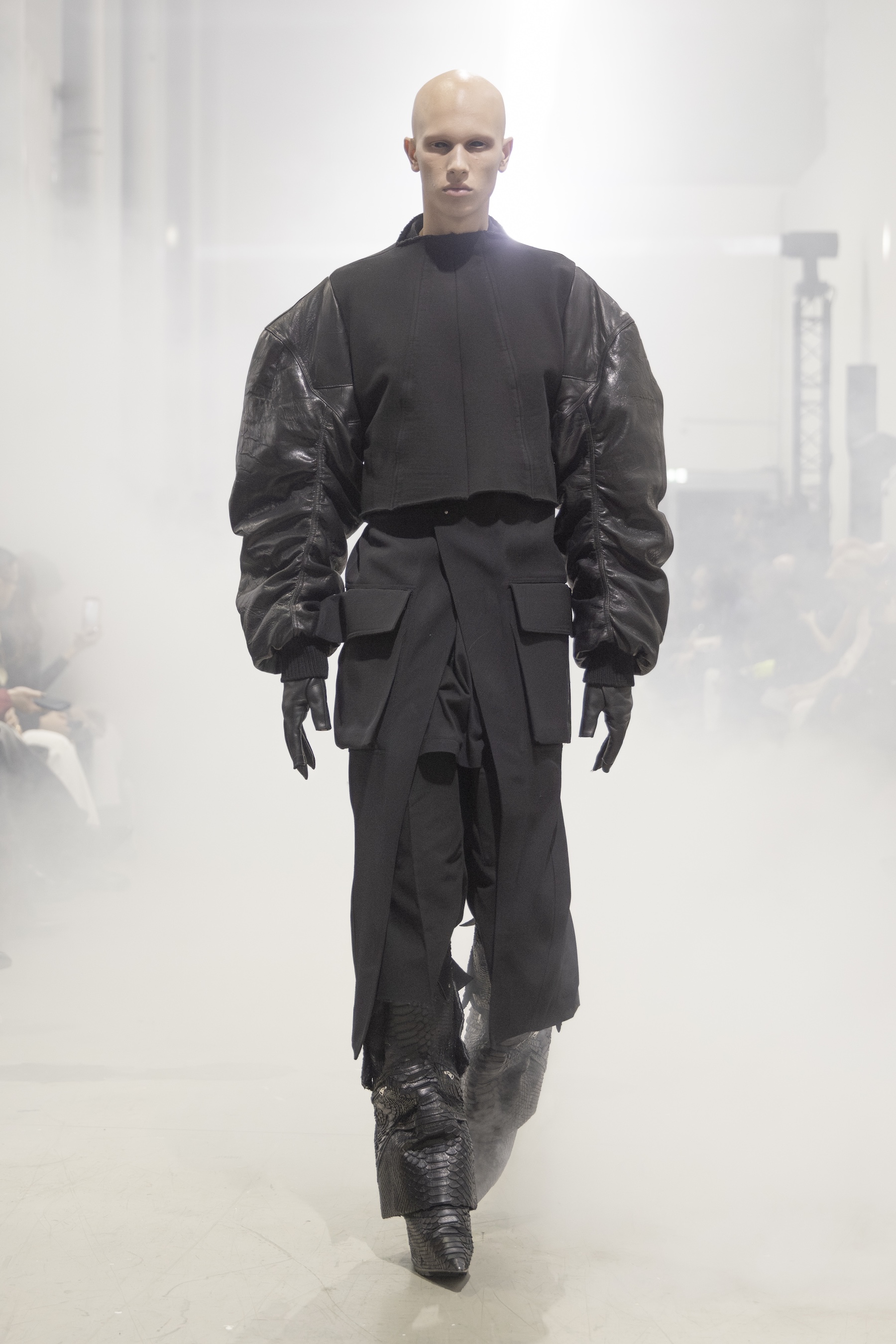
Rick Owens has never shied away from a little controversy, but this season he initially felt some hesitation around the dominant theme of his new collection – military uniforms – given the state of global current affairs. Carrying on nevertheless, the designer chose to travel down a road of ‘parody’. In a steam-filled room within the Palais de Tokyo, where the American designer has shown for over ten years, Owens’ army of goth warriors emerged through the smoke in a series of looks that twisted combat uniforms through his unmistakable codes. Silhouettes were armour-like and structured or sinuously body-hugging, crafted from protective glossy black bull leather and kevlar – a fibre used in modern combat wear that is stronger than steel – and worn with ‘grotesquely’ bloated police boots. Designed to be protective and adjustable, such as leather vests worn under detachable sleeves, these were clothes fit for battle.
Beneath the intimidating allure of Owens’ glam rock gods was the work of a global community of craftspeople. Transformable outerwear was cut from waxy cowhides tanned in Japan and made in a specialist atelier in Atsugi, performance fabrics were sourced from a third-generation Italian mill, tough insulating cabas were felted in a small workshop in Rajasthan, while shaggy shearlings and goat hides were crafted in collaboration with London designer Straytukay. And, if the gothic storylines of Owens’ world have earned him the moniker of fashion’s Prince of Darkness, his genius has always been in his balance of sentiments, always offsetting intellectual depth and beauty with humour and a touch of sleaze. Choosing to title the collection Tower – a continuation of sorts of his ‘Temple of Love’ display in Paris last season – yesterday’s display was a particularly sharp example of exactly that. It was, he said, ultimately ‘a prayer for love and hope.’ Orla Brennan

(Image credit: Courtesy of Owenscorp)
Amiri

(Image credit: Courtesy of Amiri)
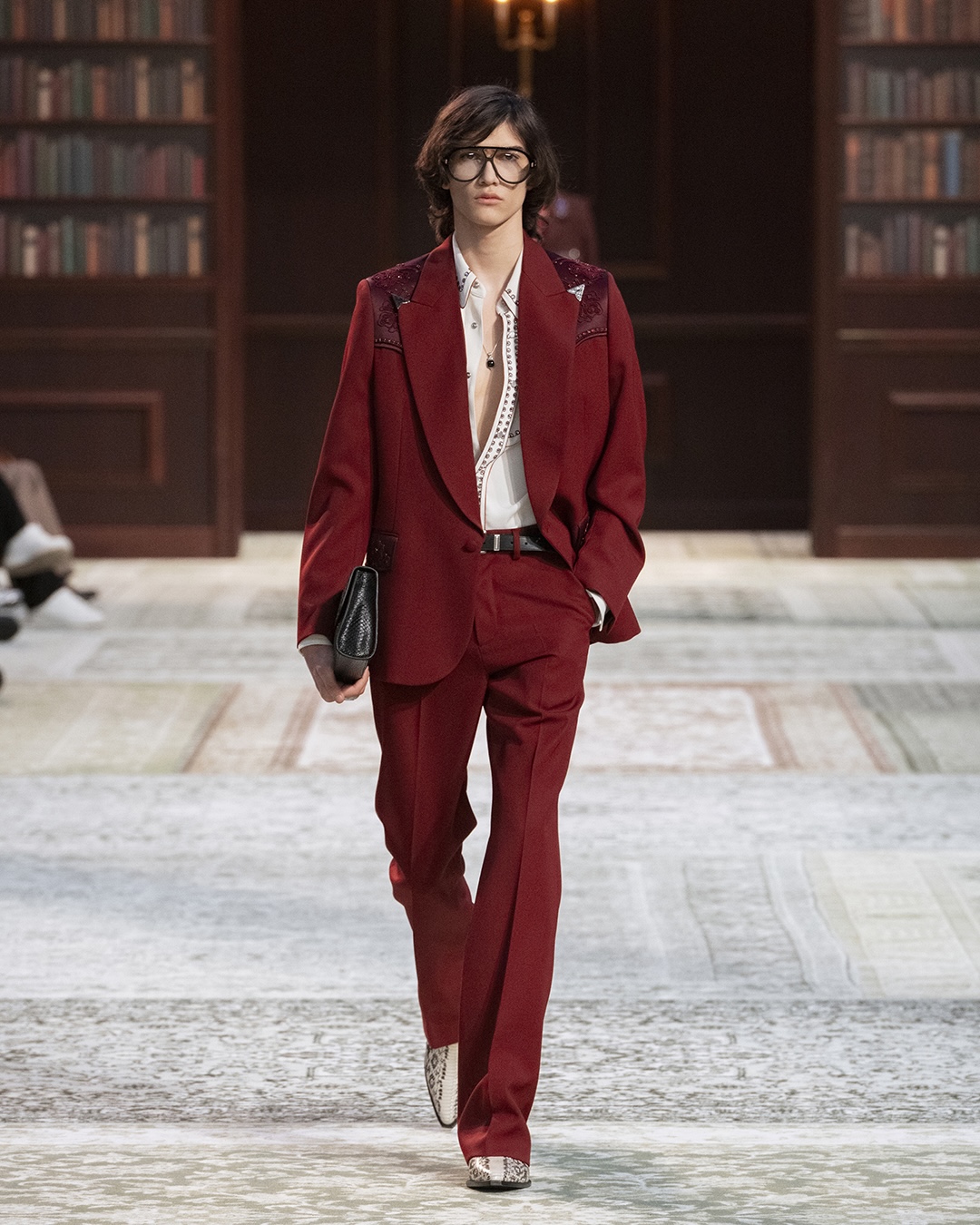
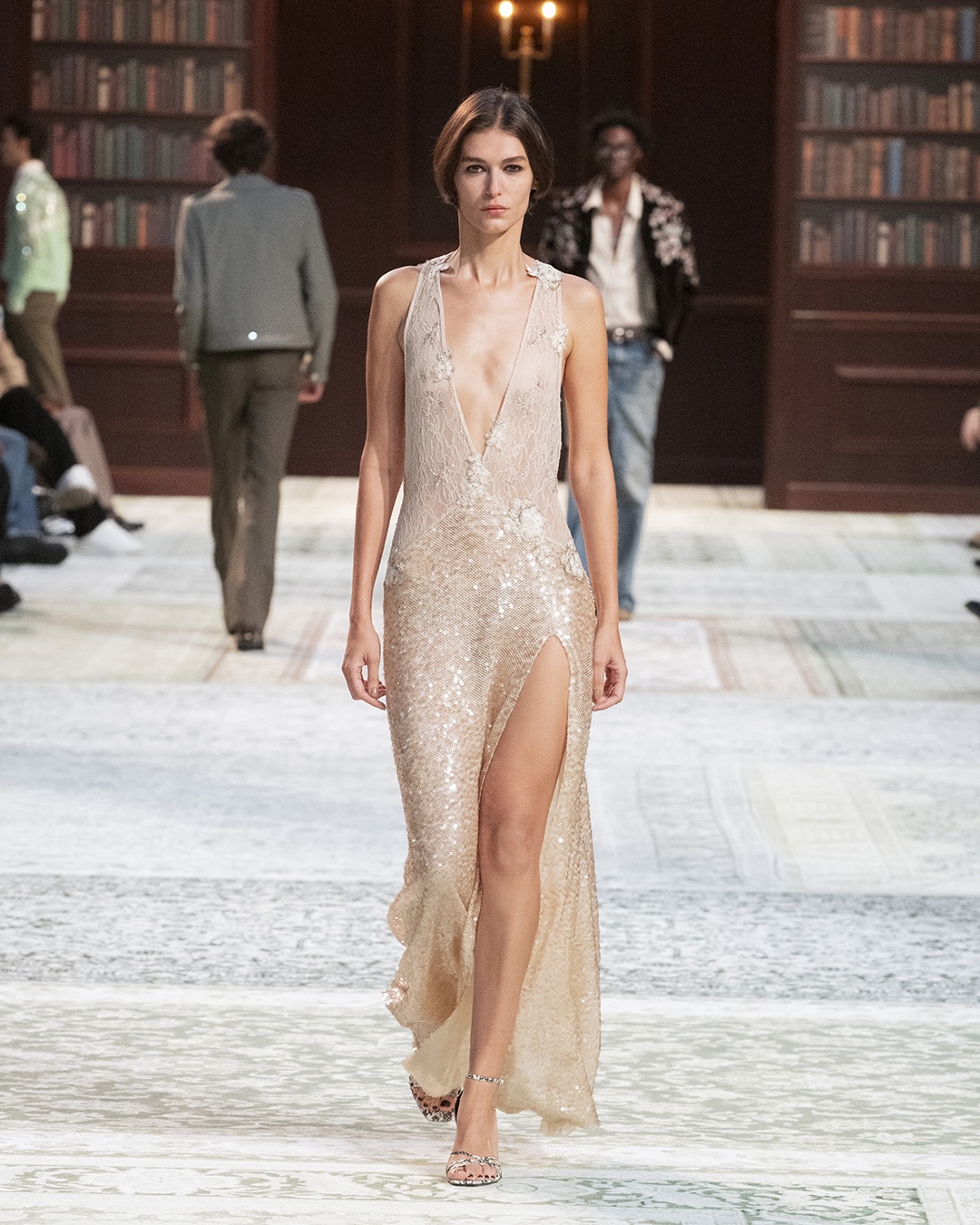
Los Angeles native Mike Amiri has shown his collections in Paris since 2018, but this season he decided to bring a bit of the Californian hospitality he grew up with to the French capital. He invited guests to the covered market Carreau du Temple in the 3rd, where the designer had recreated a Laurel Canyon home he described as ‘a luxurious den’ complete with a careworn curation of furniture and objects. The clothes this season were also close to home, drawing upon a lexicon of West Coast influences that are close to the brand – shifting eras of music culture, the Golden Age of cinema, and the louche glamour of the art scene that settled in the city during the 1970s. Expressed in an earthy palette of burgundies, brown and teals, the overall mood was one of superstar sensuality – sinuous sheer gowns followed by nostalgic tailoring worn over barely buttoned up shirts, biker-inflected second skin leather and all-American denim worn with Western accessories and embellished knits. These were, said the designer, ‘clothes that feel like an extension of who you are,’ adding that this collection was a particularly special one, straight from ‘our reality, our heart, our home.’ Orla Brennan
(Image credit: Courtesy of Amiri)
Dior

(Image credit: Courtesy of Dior)
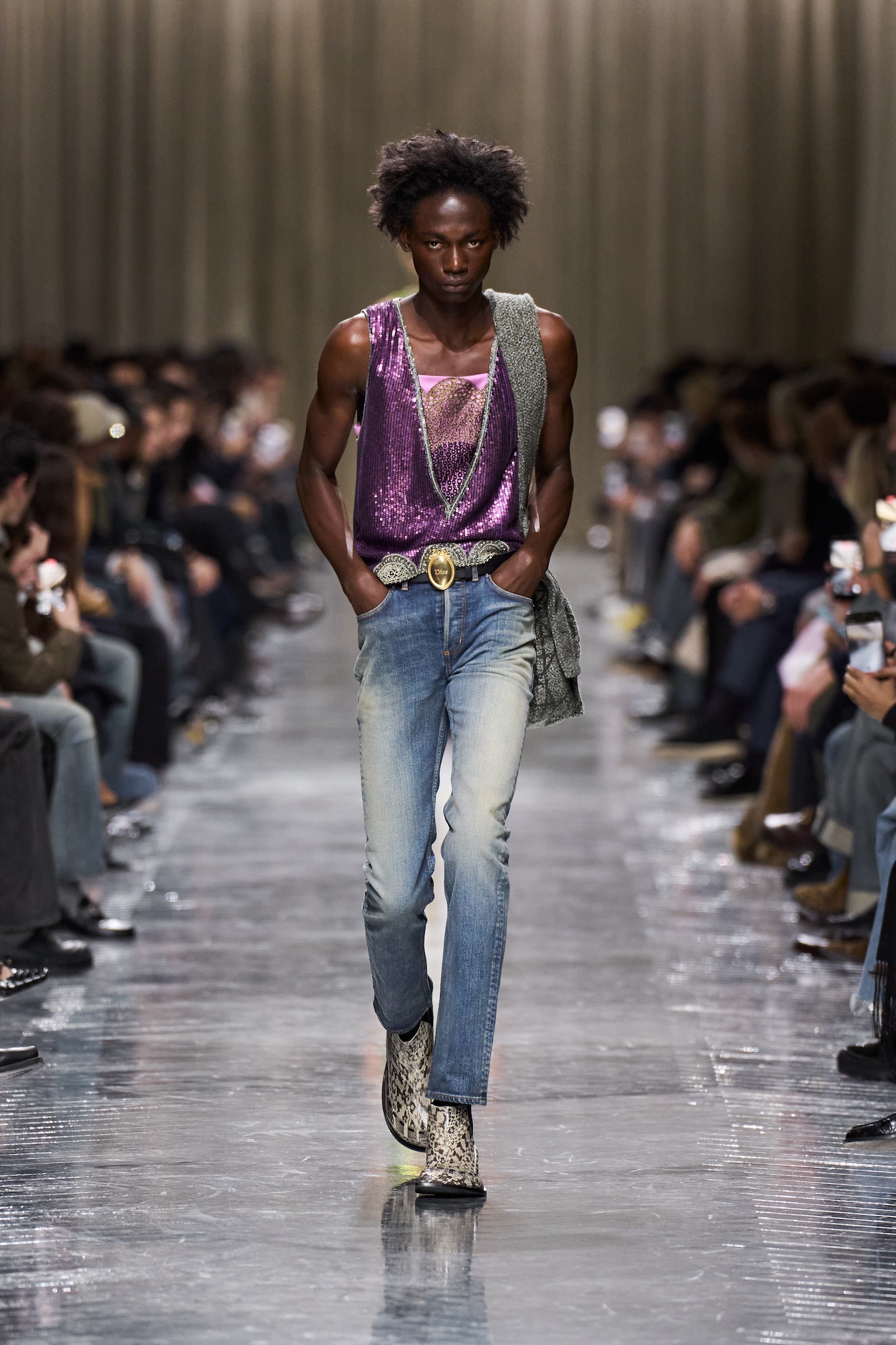
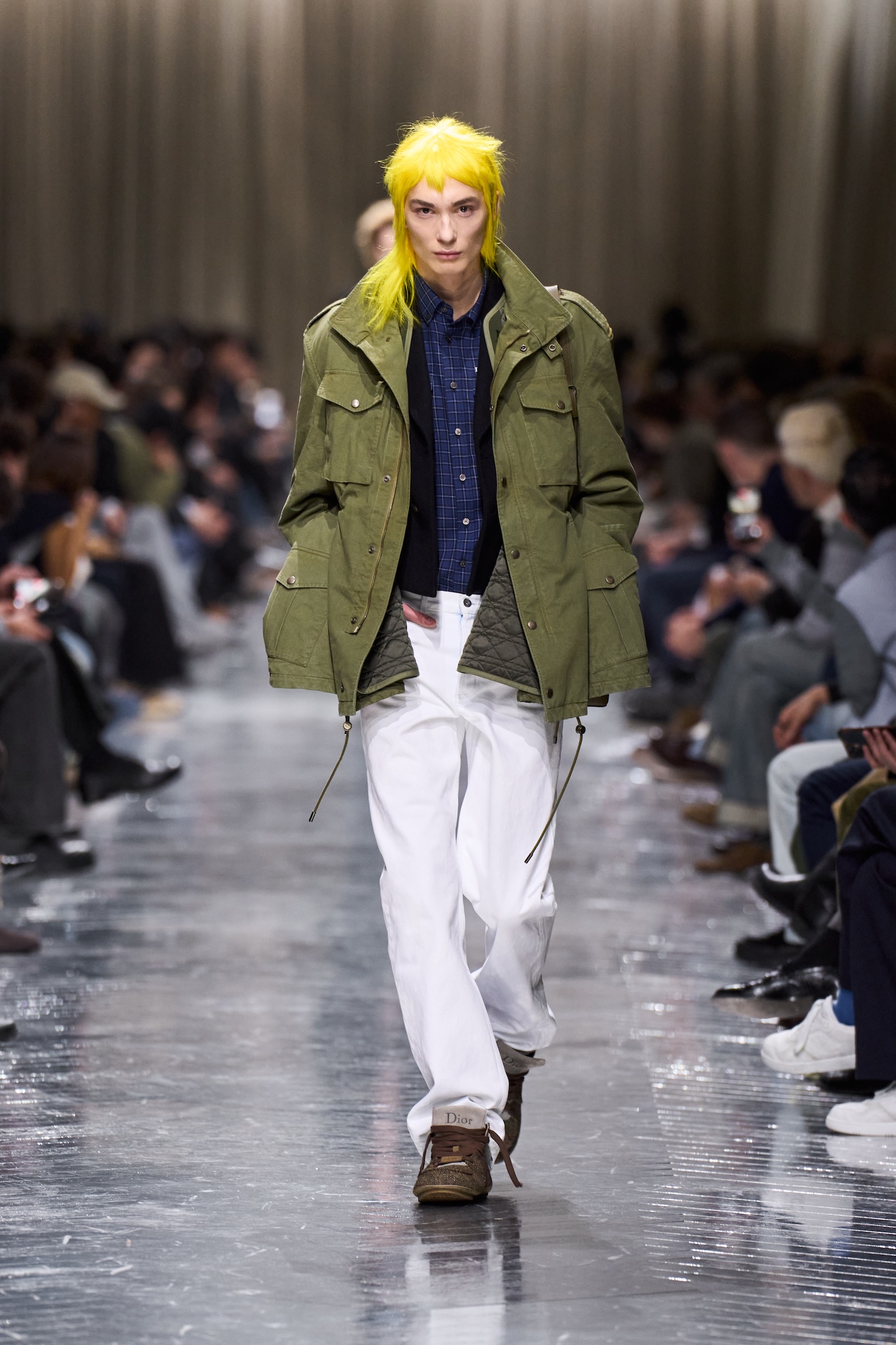
Jonathan Anderson’s second menswear show for Dior began with the British designer noticing a blue plaque for the French couturier Paul Poiret on Avenue Montaigne, just outside of Dior’s spiritual home at number 30 (in 1946, Christian Dior founded the house in a four-storey hotel hôtel particulier on the street; it remains the home of the house’s haute couture atelier today). Poiret, who began his career in 1898 but would rise to prominence in the 1910s, was known for a fluid, uncorseted line, vivid fabrications and theatrical flourishes, often borrowing from world culture (such was his influence on Belle Époque fashion, he went by the nickname ‘Le Magnifique’). Having acquired a Poiret gown, Anderson fantasised about how this would look clashed with the codes of Dior: in the opening looks, Anderson presented a series of vest tops in sequinned silk, as if that gown had been sliced away at the waist, with skinny jeans (thanks to Hedi Slimane’s Dior Homme, these are part of the house’s menswear lexicon).
What followed was a collection of vivid experimentation, a continuation of his exploration of codes of ‘history and affluence’ that began in his debut, imagining a gang of ‘aristo-youths’ dashing down a Parisian street (a short film released before the show by Jessica Madavo showed just this). So there were ultra-shrunken riffs on the Bar jacket in tweed and denim; cotton polo shirts adorned with crystal epaulettes; while jackets with enormous ‘fur’ cuffs, shimmering sweaters and undone dinner suits suggested a mood of dressing up (Poiret was well-known for his fancy dress parties; bright yellow wigs added to the liberated mood). ‘For me, fashion shows are about showing ideas,’ Anderson said of the collection, which was happily without inhibitions. ‘I don’t want normality.’ Jack Moss
(Image credit: Courtesy of Dior)
Lemaire

(Image credit: Courtesy of Lemaire)
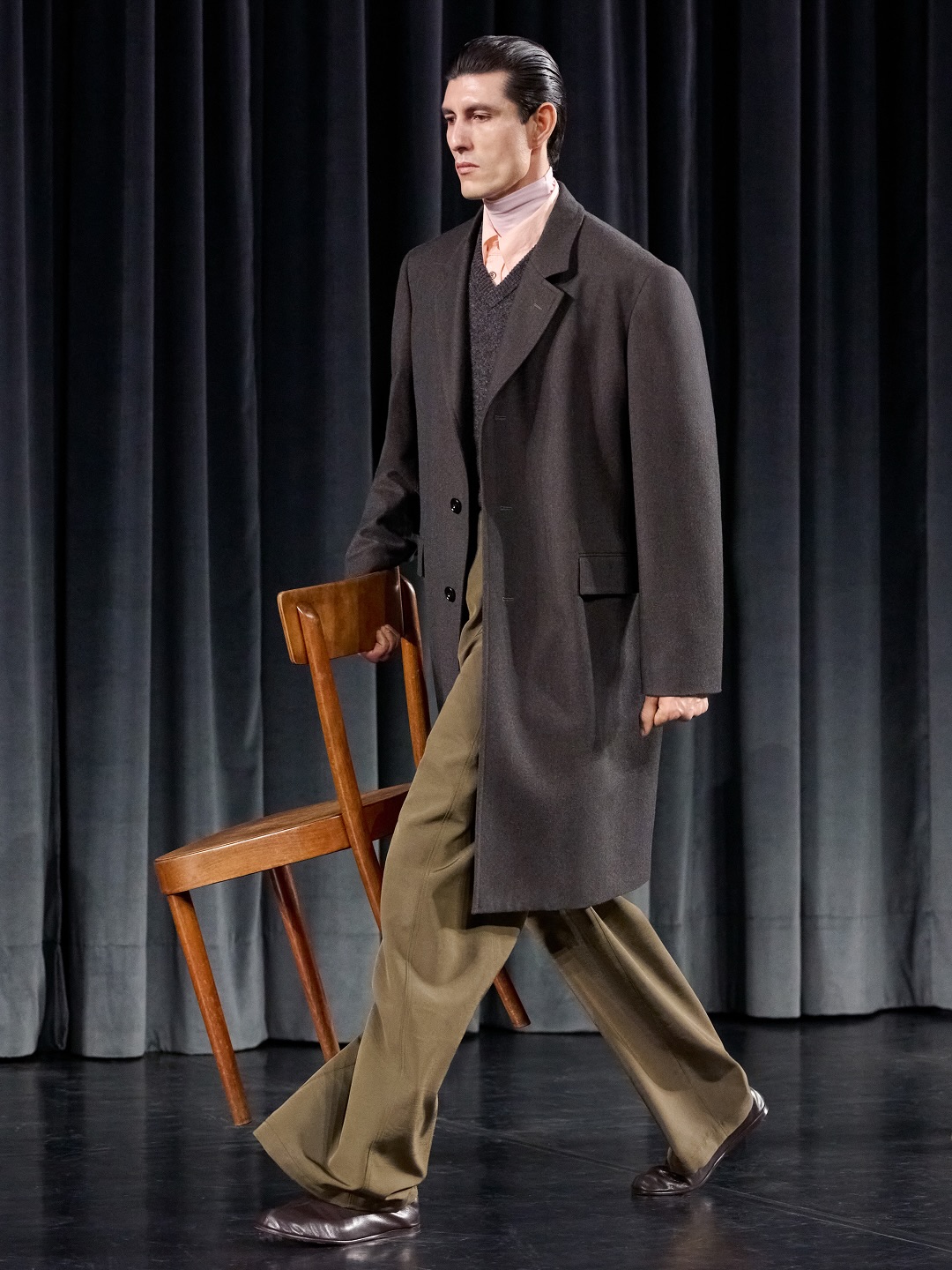
It’s true that runway shows have lost much of the exuberance of decades past, which makes it all the more refreshing when a brand brings a bit of theatre back to fashion week. Inviting guests to the imposing modern opera house Opéra Bastille in Paris’s 12th arrondissement, yesterday afternoon Christophe Lemaire and his co-artistic director Sarah-Linh Tran did exactly that. The pair enlisted choreographer Nathalie Béasse to stage a piece titled ‘mine eyes’, which imagined a Fantasia-esque world where domestic objects have ‘souls’ and fabrics and colours are able to ‘speak’.
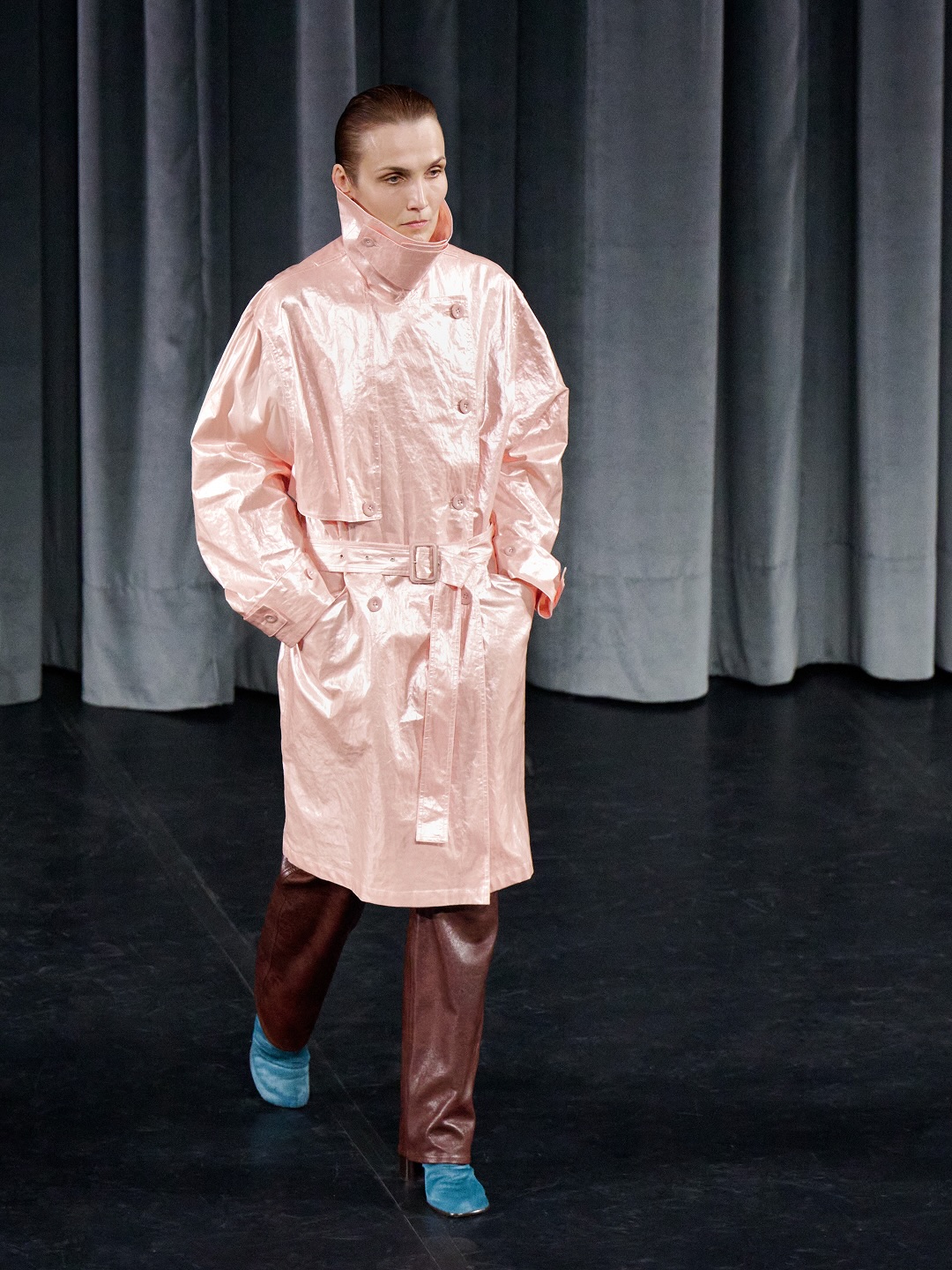
Moving through the space, some holding chairs, models brought this tableau to life dressed in looks that pushed Lemaire’s sharp codes – artful pleats, asymmetrical draping and billowing tailoring – to expressive new realms. An attention to fabrication was particularly strong this season, with ideas of illusion explored through materials that played tricks on the eye; crushed velvet that looked metallic, lacquered denim with a leather-like sheen, and coated cotton resembling dry silk. Shapeshifting took on a more literal meaning in hybrid pieces, such as quilted silk skirts that double up as capes or blankets, and the brand’s ubiquitous asymmetrical draped dresses cut in colour block dual tones. Men, meanwhile, were dressed in a wardrobe of a largely Western mood, where bootcut tailoring was layered with deerskin-style outerwear and leather boots (although a few pieces seemed to look to the east, such as mandarin jackets in supple calfskin leather.)
Continuing a surreal theme, French illustrator Roland Topor’s dark dream worlds inspired accessories, with leather bags that loosely took on the shape of buttocks and seashells. Layering so many ideas in a single collection is a gamble, but with Lemaire and Tran’s discerning execution it worked, making for one of the most memorable displays the pair have produced in some seasons. Orla Brennan
(Image credit: Courtesy of Lemaire)
Louis Vuitton

(Image credit: Louis Vuitton at Paris Fashion Week Men’s A/W 2026)
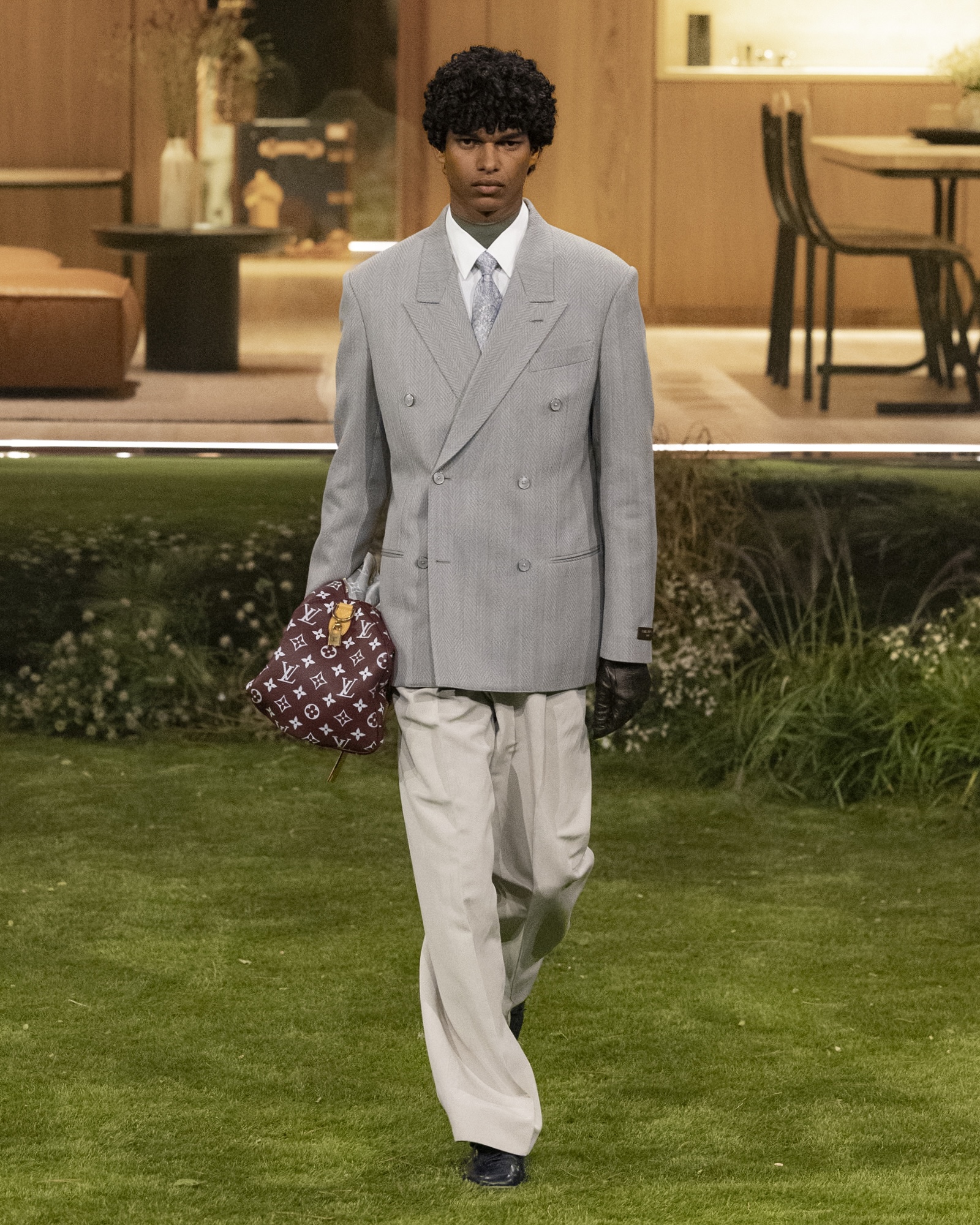
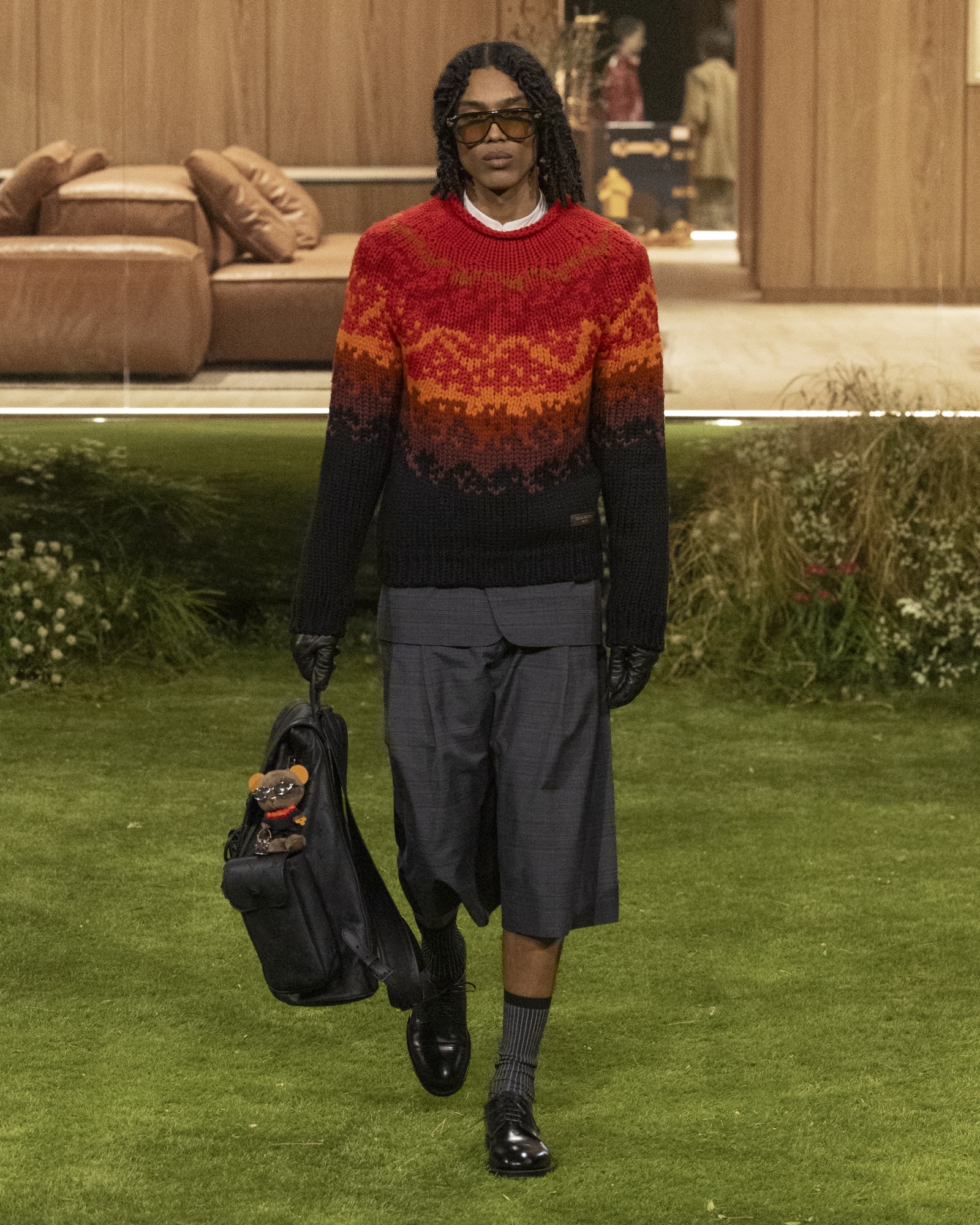
Pharrell Williams’ latest menswear collection for Louis Vuitton was one of sartorial trickery. He called it ‘timeless’, and it was certainly rooted in the canon of menswear classics – double-breasted tailoring, gentlemanly overcoats, Harrington jackets, cableknit sweaters all featured. But, thanks to the Wonka-lik wizadry of the house of Vuitton, these were transformed through futuristic fabrications developed by the house’s atelier (in Williams’ words: ‘a wardrobe structured from lasting forms elevated through the artisanal and scientific ingenuity of Louis Vuitton’). So there were jackets that appeared to be constructed from houndstooth or herringbone tweeds, but were actually a light-reflecting technical yarn (a use of trompe l’oeil ran throughout); silk and chambray jackets with in-built thermoregulatory technology; jackets applied with crystals to appear as if the wearer had been caught in a rain shower; or simply a T-shirt crafted not from simple cotton but ultra-soft vicuña.
Williams also used the occasion to reveal Drophaus, a prefabricated home in wood and glass that sat in the centre of the showspace. Described as a ‘future living concept’, it was made in collaboration with Shinji Hamauzu’s Tokyo-based company Not a Hotel, which has created a series of architect-led vacation homes across Japan. It was another attempt to create something timeless: ‘Drophaus is my vision of the future – something that makes sense today or 20 years from now because it’s built on function, savoir-faire and real human need,’ Williams told Wallpaper*. ‘I’m not an architect. I’m a solution builder.’ Jack Moss
READ: At Louis Vuitton, Pharrell Williams reveals ‘future living concept’ designed in collaboration with Not a Hotel
(Image credit: Courtesy of Louis Vuitton)
Auralee

(Image credit: Courtesy of Auralee)
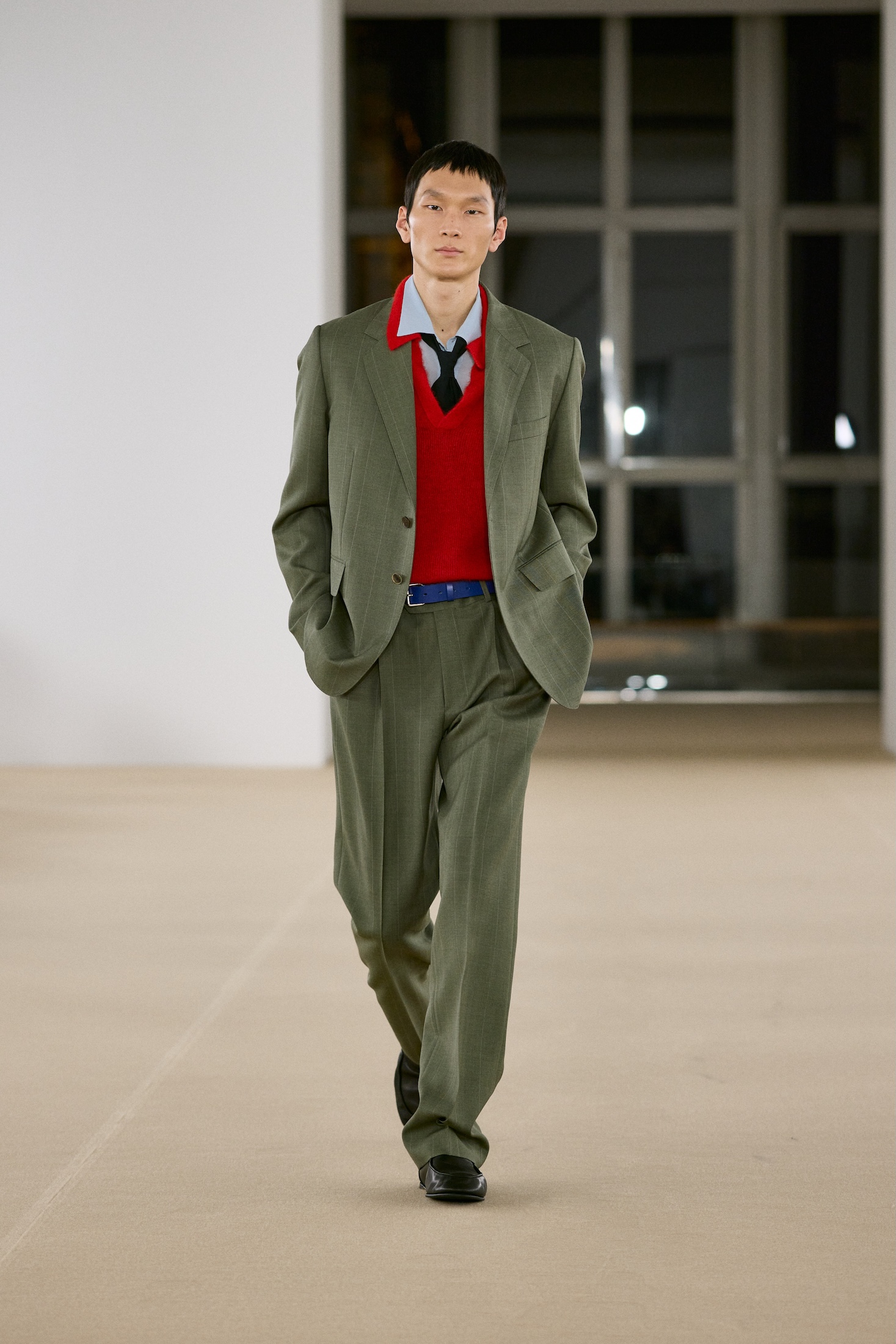
With the festivities of December a distant memory and days as short as they are bracingly cold, January can feel like a spiritual affront. Last night in Paris (20 January), a day after ‘Blue Monday’ – the most depressing day of the year – one of the menswear calendar’s most sensitive designers, Ryota Iwai of Auralee, presented an affirming shot of life amid the gloom. Asking simply ‘What makes winter joyful?’, the collection found its starting point in moments of luminosity and seasonal calm, such as the feeling of crisp morning air on the skin or the delicate way that winter sun filters through cloud lines.
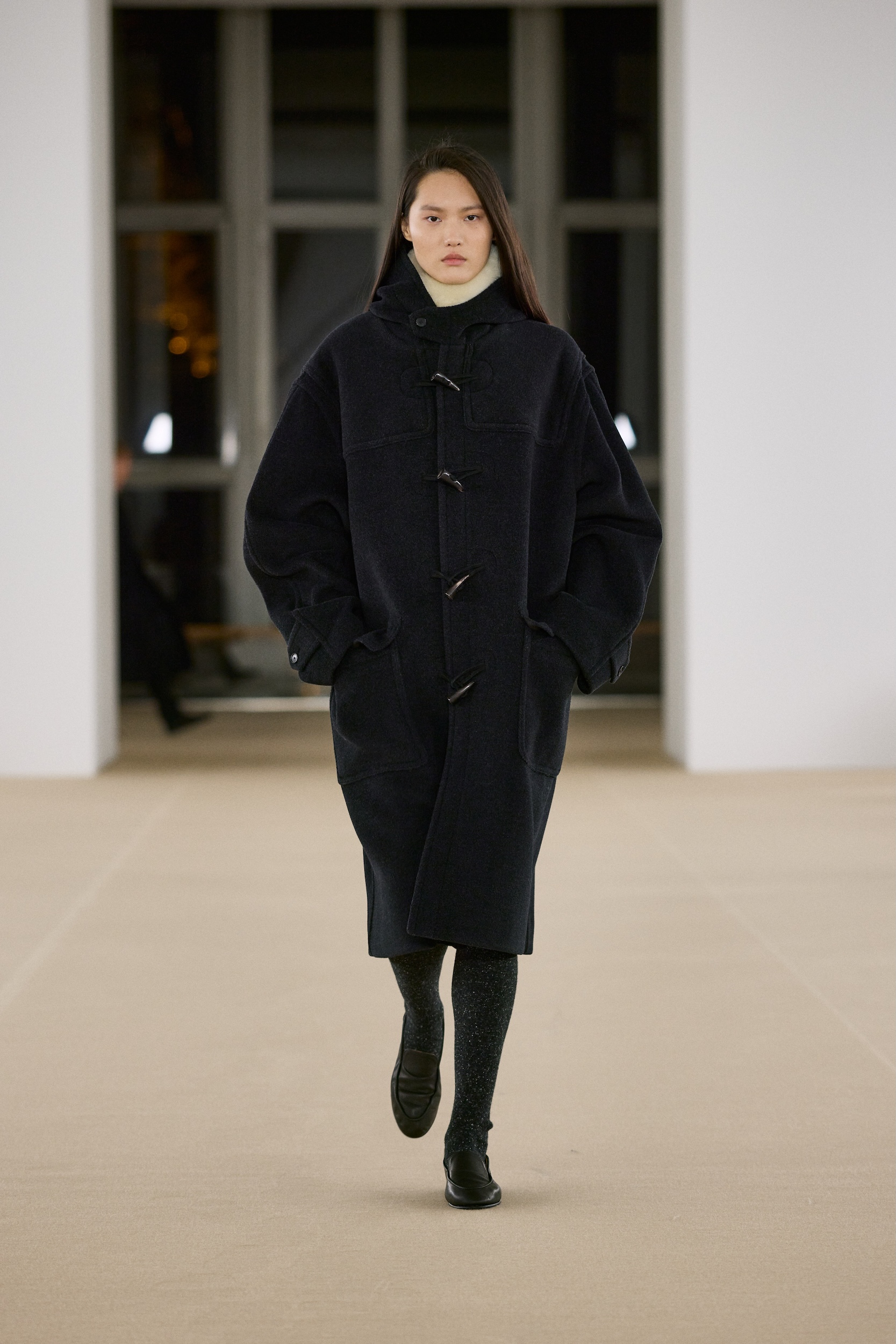
In practice, this resulted in a resolutely wearable co-ed collection, crafted with a deft elegance that has long been Auralee’s DNA (last year the brand celebrated a decade of business). Seeking ease in roomy shapes, the show opened with a series of looks that played with contrasting textures of comfort – reassuring deep piles of shearling hidden inside outerwear and warming textiles of nep yarn, tweed, and cashmere, which became wrap skirts edged with fringe that resembled classic scarves. Several looks harnessed the ease of throwing on a perfect pair of jeans on a winter Sunday, while lightness came in graceful silk georgette dresses and barely-there technical layers that mixed neutral tones with shocks of primary blue, yellow, and red. Ending with a series of sturdy, dark looks of timeless chic – an enveloping midnight-black duffle coat, a simple grey merino wool set – it was, as intended, a bid for joy in deepest, darkest winter. Orla Brennan

(Image credit: Courtesy of Auralee)
For more updates, read our live blog from Paris Fashion Week A/W Men’s 2026, where we’re covering everything from presentations to parties.
link